The Australian Poisoning Case That Shocked the World - What the Trial Record Actually Revealed
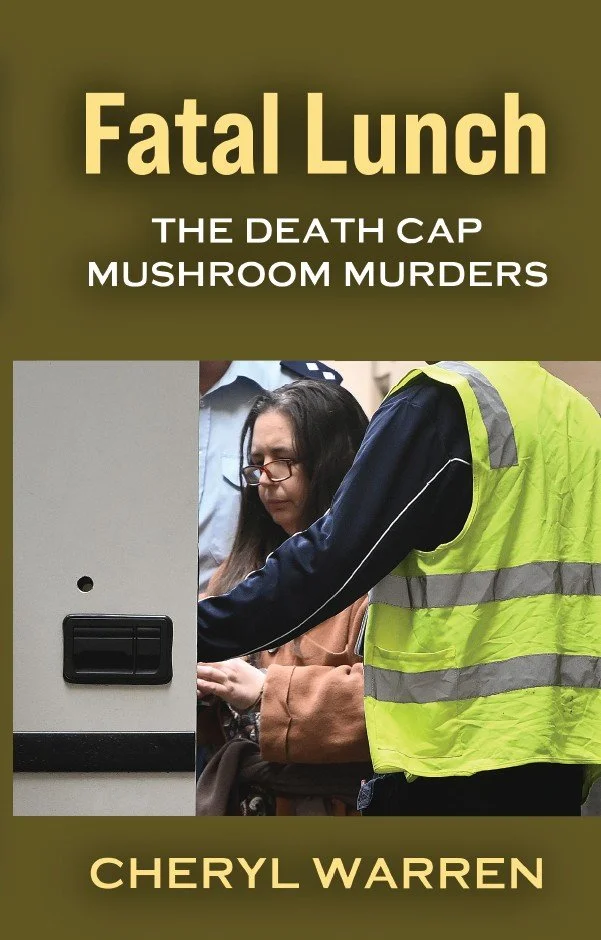
On 29 July 2023, a woman named Erin Patterson invited four members of her estranged husband's family to lunch at her home in Leongatha, a quiet town in rural Victoria, Australia. She served individual beef Wellingtons. Within days, three of her guests were dead.
The case became one of the most followed criminal trials in recent memory. The BBC live-blogged the verdict. CNN, NBC, Al Jazeera, and Reuters ran major features. Millions of Australians followed daily podcast summaries of the proceedings. For the first time in the history of Victoria's Supreme Court, the sentencing hearing was broadcast live - the public interest was that intense.
But most of the coverage moved fast. Headlines captured the broad strokes. The detail - the forensic trail, the digital evidence, the eight days the accused spent in the witness box - got less attention than it deserved.
I spent the better part of a year reading everything I could find. The court judgements. The judge's sentencing remarks. The evidence presented in court - including incredibly complex, but interesting, forensic evidence. The daily trial blogs that documented every witness, every cross-examination, every piece of evidence the jury heard. I wrote a book about it. And what I found in the detail was a story far more complex than the headlines suggested.
Here is some of what the trial record actually revealed.
The Dehydrator
A food dehydrator was central to the prosecution's case. Prosecutors argued Patterson used it to dry the death cap mushrooms before incorporating them into the beef Wellington filling.
Five days after the lunch - while her guests were fighting for their lives in hospital - Patterson drove to the local tip and disposed of the dehydrator in the e-waste skip. CCTV footage captured her there. Police recovered the dehydrator.
Forensic testing of debris scraped from the dehydrator trays used DNA barcoding - a technique that matches genetic material to known species. Two of the seven samples returned a 99 per cent match to Amanita phalloides. Death cap mushroom.
The defence did not challenge those findings.
The Phones
The digital evidence in this case is a story in itself.
Patterson had a primary phone - Phone A - that she had used since 2021. During the first police search of her home, carrier records showed it was still active on the network. Then it dropped off. It was never found.
What Patterson handed police was a different device - Phone B - that had made a total of three calls in its entire existence, all three on the day of the search. Phone B was factory reset three times in August 2023 alone. The final reset came at 5:16am while the phone was sitting inside a police evidence locker. Patterson later told the court she had logged into her Samsung account remotely and wanted to see if a reset would work.
It did.
A third phone - Phone C - briefly carried the SIM card from Phone A after the search, then also disappeared from the network. Neither Phone A nor Phone C were ever recovered.
The Plates
One of the quieter but more striking details from the trial concerned the plates.
Ian Wilkinson - the only survivor - described the meal being served on four large grey plates and one smaller, different-coloured plate. An orangey-tan colour. His wife Heather had noticed the different plate and commented on it.
The prosecution argued this was how Patterson controlled which portion was safe - the different plate was hers. Patterson maintained the plates were simply what she had available.
The jury heard both versions.
The Health Department Trail
In the days after the lunch, the Victorian Health Department launched an urgent investigation to identify the source of the mushrooms. Four people were critically ill. They needed to know if there was a public health risk.
Patterson was difficult to reach. When they finally spoke with her, she told them the mushrooms came from an Asian grocer in Oakleigh or Clayton. Then it became Mount Waverley. Then Glen Waverley. Health officials checked every store they could find. Nothing matched. No other poisonings had been reported anywhere.
By 11 August they formally concluded the commercial food supply chain was not contaminated.
The prosecution later argued Patterson had sent them on a deliberate wild goose chase while her guests lay dying.
The Verdict
The trial ran for nine weeks. More than fifty witnesses gave evidence. Patterson spent eight days in the witness box - five of them under cross-examination. The jury deliberated for approximately thirty hours over six and a half days.
The foreperson stood and read the verdicts. Guilty. Four times.
No motive was ever proven. The entire case was circumstantial. And yet twelve jurors reached the same conclusion unanimously.
Patterson was sentenced to life imprisonment with a non-parole period of thirty-three years. The sentencing was broadcast live - the first time in Victoria's Supreme Court history.
Both the prosecution and the defence have now appealed. The story is not over.
